
Hybrid / On-Grid Systems
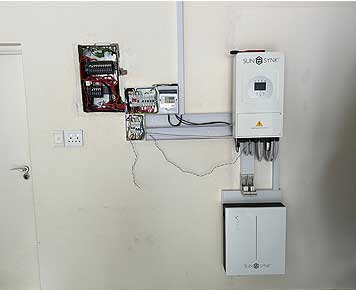
In most homes, the most practical option is a grid-connected solar system with battery backup. This setup allows you to use grid electricity whenever it’s available, while still having reliable backup power when the grid goes down.
When Eskom or municipal power is online, the system can support higher-demand appliances such as geysers, ovens, and air conditioners. During load-shedding or power outages, selected essential circuits are automatically powered by the solar panels and batteries, keeping lights, plugs, and other critical items running.
Solar System
This type of system offers a balanced solution reducing reliance on the grid without limiting everyday household power use and is ideal for homeowners who want backup power as well as long-term energy savings.
Power during load-shedding
Lower monthly electricity bills
Runs essential circuits automatically
Easy to expand in future
100%
Quality Workmanship
Why Choose Hybrid / On-Grid?
Why choose a hybrid solar system over off-grid?
A hybrid system gives you backup power without giving up the grid, allowing full household power use when Eskom is available.
Can a hybrid system reduce my electricity bill?
Yes. Solar power is used first during the day, which lowers the amount of electricity you buy from the grid.
Does a hybrid system work during load-shedding?
Yes. When the grid goes down, the system automatically switches to battery and solar power for essential circuits.
Can I still use high-power appliances?
Yes. While the grid is online, you can run appliances like geysers, ovens, and air conditioners as normal.
Is a hybrid system future-proof?
Hybrid systems are flexible and can be expanded later by adding more panels or batteries as your needs change
Frequently Asked Questions
How do solar panels actually work?
ShawnOwen2025-12-31T14:10:04+02:00Solar panels capture sunlight and turn it into electricity you can use in your home.
Will a solar system still work during load‑shedding?
ShawnOwen2025-12-31T14:11:48+02:00Only if it includes battery storage — panels alone won’t power your home when the grid is off.
Do I still need Eskom if I install solar?
ShawnOwen2025-12-31T14:12:57+02:00Yes most systems stay connected so you can draw from the grid when solar isn’t enough.
Can I expand my solar system later if I need more power?
ShawnOwen2025-11-30T10:17:01+02:00Yes many solar installations are modular. You can start with a base system and expand later (add more panels, batteries or larger inverters) as demand grows.
How long will my solar panels last?
ShawnOwen2025-12-31T14:13:45+02:00Most solar panels are built to last at least 20–25 years. With good installation and maintenance, many deliver reliable performance for decades.
Do I need a battery storage system, or can I use solar without one?
ShawnOwen2025-11-30T10:18:43+02:00You don’t necessarily need a battery: solar panels can supply power directly during the day even without batteries. However, if you want power at night, backup during outages or full energy independence (off-grid or hybrid), a battery makes a big difference.
Does solar still work during bad weather or in seasons with less sun?
ShawnOwen2025-11-30T10:19:34+02:00Yes quality solar panels continue to produce power even on cloudy or rainy days, though output will be lower. Rain can also help keep panels clean, preserving efficiency.
Is my roof suitable for solar installation?
ShawnOwen2025-11-30T10:20:22+02:00Most solid, stable roofs are fine but the roof should ideally have clear northern exposure (in South Africa), be structurally sound, and not heavily shaded. Flat or slightly inclined roofs can work if mounting is done correctly.